
If you share your home with a dog or cat, your carpet usually needs more attention than it would in a pet-free household. At Fiber ProTector of Chicago, we know fur, tracked-in dirt, dander, moisture, and occasional accidents can build up between professional cleanings, and that buildup can wear down even a high-end carpet or area rug faster than most owners expect.
So, how often should you clean carpet in a home with pets? For many households, professional carpet cleaning every 3 to 6 months is a reasonable starting point. Homes with multiple pets, heavy shedding, frequent accidents, allergies, or high-traffic carpet may need cleaning more often. Homes with one well-trained pet and relatively light traffic may be able to go longer.
The right schedule depends less on the calendar alone and more on how your carpet is being used.
Key Takeaways
- Pet households often benefit from professional carpet cleaning every 3 to 6 months.
- Multiple pets, heavy shedding, accidents, and high foot traffic can shorten that interval.
- Regular vacuuming helps remove surface debris between professional cleanings.
- Fresh spills and pet accidents should be addressed promptly rather than waiting for the next scheduled cleaning.
- Carpet protection can make routine maintenance easier by helping resist dirt and staining.
- The appropriate cleaning method depends on the carpet fiber, construction, condition, and type of soiling.
How Often Should You Clean Carpet With Pets?
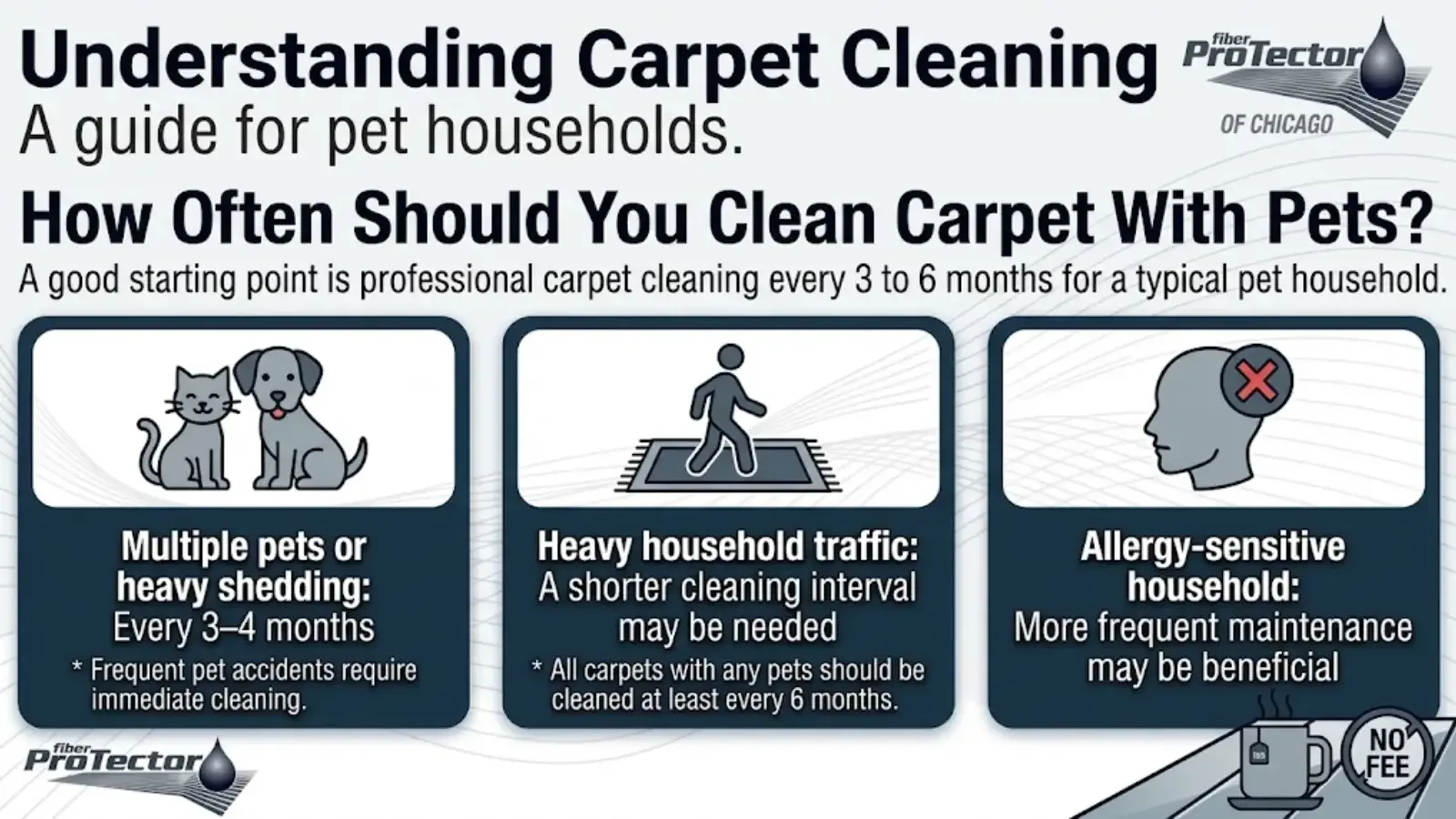
A good starting point is professional carpet cleaning every 3 to 6 months for a typical pet household. However, there is no universal schedule that works for every home.
Consider these factors:
| Household Condition | Practical Cleaning Approach |
| One pet, low traffic | Every 6–12 months may be reasonable |
| One or two pets, normal traffic | Every 3–6 months |
| Multiple pets or heavy shedding | Every 3–4 months may be appropriate |
| Frequent pet accidents | Clean affected areas immediately and consider more frequent professional cleaning |
| Heavy household traffic | A shorter cleaning interval may be needed |
| Allergy-sensitive household | More frequent maintenance may be beneficial |
These are starting points, not rigid rules. A carpet that still looks clean can have soil and debris worked into the fibers, while another carpet may visibly need attention much sooner.
The best schedule considers pet activity, traffic, carpet type, household needs, and how well the carpet is maintained between professional cleanings.
Why Do Homes With Pets Need Carpet Cleaning More Often?
Pets spend a lot of time on the floor. They can bring outdoor soil indoors, shed hair and dander, and occasionally track moisture or other contaminants onto carpeting.
The problem isn’t always obvious.
A carpet can look reasonably clean while debris is becoming embedded deeper into the pile. High-traffic areas can also develop a dull or flattened appearance before the entire carpet looks dirty, and that gradual wear is exactly what shortens the life of a nicer carpet or rug.
Regular vacuuming is an important part of controlling everyday debris, but it does not replace periodic professional cleaning.
Pet Hair Is Only Part of the Problem
Visible pet hair tends to get the most attention, but it is not the only thing that accumulates in carpet.
Depending on the household, carpet may also collect:
- Tracked-in soil
- Dust and household debris
- Pet dander
- Small particles from outdoor environments
- Moisture from wet paws
- Residue from spills and accidents
- Debris concentrated in high-traffic areas
This is why a carpet-cleaning schedule based only on visible pet hair can underestimate how much maintenance the flooring actually needs.
How Often Should You Vacuum Carpet With Pets?
Professional cleaning is only one part of carpet care.
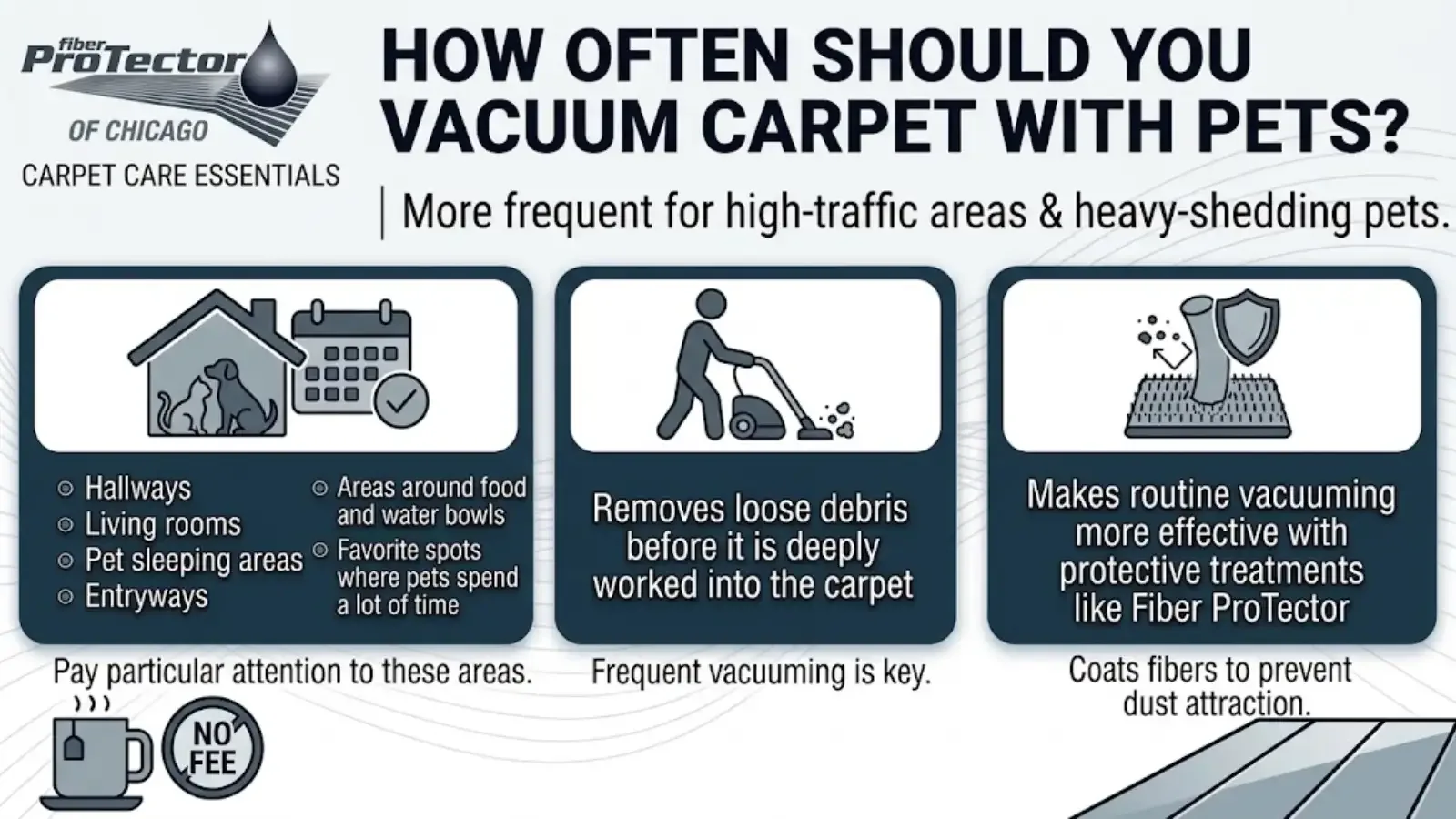
Homes with pets should generally make vacuuming part of their normal cleaning routine. High-traffic areas and homes with heavy-shedding pets may need more frequent vacuuming than rooms that receive little use.
Pay particular attention to:
- Hallways
- Living rooms
- Pet sleeping areas
- Entryways
- Areas around food and water bowls
- Favorite spots where pets spend a lot of time
Frequent vacuuming helps remove loose debris before it becomes more deeply worked into the carpet.
It also supports the effectiveness of protective treatments. Fiber ProTector, for example, is designed to coat individual fibers and make routine vacuuming more effective by helping prevent fabrics from attracting dust and dirt.
When Should You Clean Carpet After a Pet Accident?
Clean pet accidents as soon as possible rather than waiting for your next professional carpet cleaning.
The longer a spill or accident remains untreated, the more opportunity it has to affect the carpet fibers or underlying materials.
For a fresh spill, the company information provided by Fiber ProTector recommends blotting with a clean, dry cloth. The goal is to address the affected area promptly without unnecessarily spreading the substance across a larger section of carpet.
For recurring or difficult pet accidents, professional cleaning may be appropriate.
The exact approach should depend on the carpet’s material and the nature of the contamination. Delicate fibers and specialty carpeting should not automatically be treated the same way as standard synthetic carpet.
Does Carpet Type Affect How Often You Should Clean It?
Yes. Carpet construction and fiber type can influence both the cleaning frequency and the appropriate cleaning method.
Some carpets are more forgiving of everyday wear, while delicate materials require greater care. Wool and other fine fibers, for example, should be handled according to their specific care requirements rather than treated like generic carpeting.
The same principle applies to area rugs and upholstered furniture.
Before choosing a cleaning process, consider:
- Fiber type
- Carpet construction
- Age and condition
- Colorfastness
- Previous treatments
- Type of soil or staining
- Amount of household traffic
This is one reason a professional should evaluate the material before deciding how aggressively it should be cleaned.
Does Carpet Protection Reduce How Often You Need Professional Cleaning?
Carpet protection can help make routine maintenance easier, but it does not eliminate the need for cleaning.

Fiber ProTector describes its treatment as a preventive maintenance system that creates a molecular shield around individual fibers. According to the company information provided, the treatment is designed to help prevent fabrics from attracting dust and dirt, make vacuuming more effective, and help homeowners save through less-frequent professional cleaning.
It is also described as:
- Quick-drying
- Nontoxic
- Safe for use around children and pets
- Bacteriostatic, meaning it resists the spread of mold, mildew, and germs
- Invisible on treated materials
- Designed to protect against sun fading
- Suitable for materials including wool, silk, leather, suede, Ultrasuede, and lace
- Backed by WoolSafe EnviroSeal certification and recognition as an ASID National Industry Partner
The treatment is positioned as protection for upholstery, carpeting, and area rugs, not as a replacement for normal cleaning.
That distinction matters.
Protection helps with prevention. Cleaning removes accumulated soil and contaminants. You need both for long-term carpet care.
How Fiber ProTector Fits Into a Pet-Friendly Home
Pet owners often face a frustrating choice: enjoy their furnishings normally or constantly worry about stains and damage.
Fiber ProTector of Chicago takes a preventive approach, one built for people who have invested in quality furnishings and want to keep them looking that way.
The company was established in Chicago after Ed Brusic, following 35 years of crafting custom high-end furnishings at Brusic Rose, partnered with Fiber ProTector of America to bring the treatment to the local market.
The company provides:
- Fiber ProTector Treatment
- Upholstery Cleaning
- Carpeting & Area Rug Cleaning
Fiber ProTector is also described as being used by hotels, cruise lines, airlines, and homeowners, with interior designers across the country relying on the treatment for residential and commercial projects. The treatment is WoolSafe EnviroSeal-certified and recognized as an ASID National Industry Partner, credentials that matter to anyone protecting fine wool rugs, silk textiles, or other higher-end materials from daily life with pets.
For a pet-owning household, the value of a protective treatment is straightforward: help protect the fibers before stains and everyday soil become a bigger maintenance problem, so the furnishings you invested in actually last.
A Practical Carpet Cleaning Schedule for Pet Owners
Instead of asking only, “How often clean carpet?” use a maintenance schedule that separates daily, weekly, and professional care.
Daily: Deal With Problems Quickly
You don’t need to deep-clean the entire carpet every day.
Instead:
- Address fresh spills promptly.
- Deal with pet accidents when they happen.
- Keep obvious debris from being tracked through the house.
- Pay attention to areas where pets spend most of their time.
Weekly: Maintain High-Traffic Areas
Vacuum regularly, paying extra attention to areas that receive the most traffic.
Homes with heavy-shedding pets may need more frequent vacuuming.
Every 3–6 Months: Consider Professional Cleaning
For many pet households, this is a useful starting interval.
Move toward the shorter end of the range when you have:
- Multiple pets
- Heavy shedding
- Frequent visitors
- High household traffic
- Repeated pet accidents
- Carpet that begins looking dull or heavily soiled
Annually: Evaluate the Whole Home
Even if certain rooms receive little traffic, an annual assessment can help you determine whether your current maintenance routine is working.
Look beyond appearance. Check high-traffic paths, pet areas, corners, furniture edges, and places where soil tends to accumulate.
Signs Your Carpet Needs Professional Cleaning
The calendar isn’t the only way to decide when it is time for professional service.
Look for signs such as:
1. High-Traffic Areas Look Darker
If hallways and walking paths look noticeably different from surrounding carpet, accumulated soil may be contributing to the change.
2. Pet Odors Keep Returning
A persistent odor can indicate that ordinary surface cleaning has not resolved the underlying problem.
3. Stains Keep Reappearing
A recurring spot deserves attention rather than repeated superficial treatment.
4. The Carpet Looks Dull
Carpet does not always become obviously “dirty.” Embedded soil can change its overall appearance gradually.
5. Your Pets Track More Dirt Indoors
If your dogs or cats spend substantial time outdoors, seasonal changes can increase the amount of material being brought inside.
6. Vacuuming Doesn’t Seem to Be Enough
If you’re vacuuming regularly but the carpet continues to look or feel heavily soiled, professional cleaning may be the next step.
Should You Clean Carpet More Often in Chicago?
Chicago homes experience changing conditions throughout the year, and those changes can affect how much outdoor material gets tracked indoors.
Wet conditions, winter weather, mud, and seasonal outdoor activity can all change the maintenance demands placed on carpeting.
That doesn’t mean every Chicago household needs the same cleaning schedule.
Instead, use local conditions as one variable when deciding whether your normal 3-to-6-month schedule still makes sense.
If pets are frequently going outdoors and returning with wet or dirty paws, for example, your entryway and other high-traffic areas may need more attention than rarely used rooms.
Carpet Cleaning vs. Carpet Protection: What’s the Difference?
These two services solve different problems.
Carpet cleaning removes accumulated soil and helps restore the appearance of the material.
Fiber protection is preventive. It is designed to create a protective barrier around individual fibers so that dust and dirt are less likely to attach as readily and spills can be easier to manage.
Think of it like maintaining a valuable piece of furniture.
Cleaning deals with what has already accumulated. Protection helps reduce future wear and staining.
For pet owners who want to keep carpeting and area rugs looking good for longer, combining appropriate cleaning with preventive protection can be a practical approach.
Common Carpet-Cleaning Mistakes Pet Owners Make
Waiting Until the Carpet Looks Dirty
Visible dirt is not a reliable maintenance schedule. By the time carpet looks heavily soiled, debris may already have been worked into the fibers.
Treating Every Carpet the Same
A cleaning method appropriate for one material may not be appropriate for another. Fiber type and construction matter.
Ignoring High-Traffic Areas
A home’s entire carpet may not need the same level of attention. Concentrate on the places where pets and people actually spend their time.
Relying Only on Spot Cleaning
Spot cleaning has an important role, particularly for fresh accidents and spills. It should not necessarily replace periodic whole-carpet maintenance.
Assuming Carpet Protection Means You Never Need Cleaning
Protection is preventive maintenance. It does not mean accumulated soil disappears.
How Often Should You Clean Area Rugs in a Pet Home?
Area rugs deserve the same attention as wall-to-wall carpet, but their cleaning schedule can vary considerably based on their material, location, and construction.
A rug in a busy living room where pets spend most of their day may require more frequent professional attention than a decorative rug in a low-traffic room.
Fine materials such as wool, silk, and other delicate fibers also require appropriate care. This is particularly relevant for a light-colored wool rug or another investment piece living alongside a shedding, muddy-pawed pet.
Fiber ProTector treatments are described as being suitable for even fine materials, including leather, suede, Ultrasuede, silk, lace, and wool, and the treatment’s WoolSafe EnviroSeal certification is specifically relevant for households protecting wool rugs from pets.
For valuable or delicate area rugs, professional evaluation is preferable to assuming that a standard carpet-cleaning approach is appropriate.
How Often Should You Clean Upholstery in a Home With Pets?
The same principles apply to upholstered furniture.
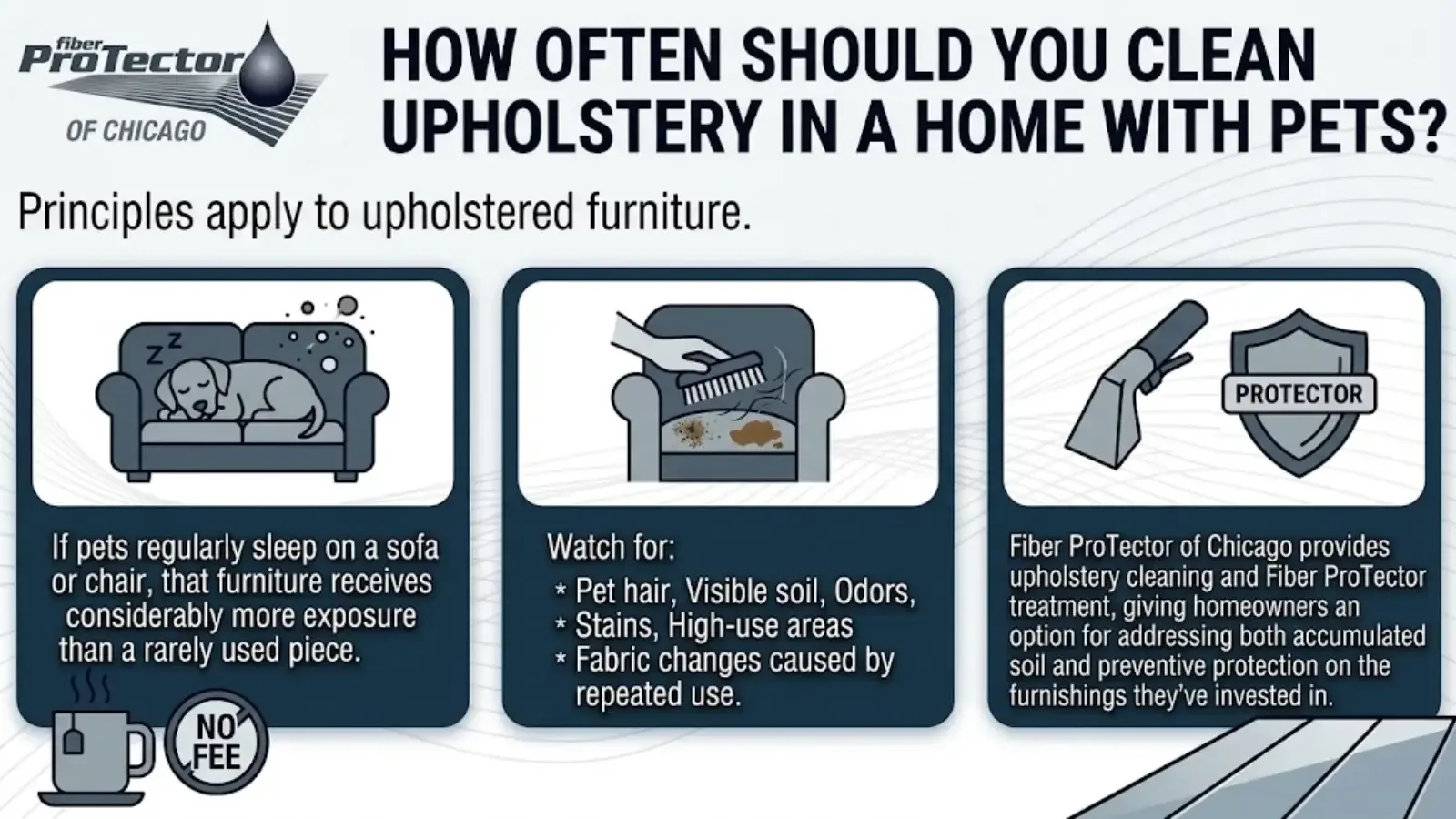
If pets regularly sleep on a sofa or chair, that furniture receives considerably more exposure than a rarely used piece.
Watch for:
- Pet hair
- Visible soil
- Odors
- Stains
- High-use areas
- Fabric changes caused by repeated use
Fiber ProTector of Chicago also provides upholstery cleaning and Fiber ProTector treatment, giving homeowners an option for addressing both accumulated soil and preventive protection on the furnishings they’ve invested in.
The Bottom Line: How Often Should You Clean Carpet With Pets?
For most pet-owning households, professional carpet cleaning every 3 to 6 months is a practical starting point. But your ideal schedule depends on the number of pets, shedding, accidents, household traffic, carpet type, and how consistently you vacuum and address spills.
The goal isn’t to clean carpet simply because another three months have passed. The goal is to keep soil from becoming a long-term problem while protecting the furnishings you’ve already invested in.
For Chicago homeowners, Fiber ProTector of Chicago provides carpet and area rug cleaning, upholstery cleaning, and Fiber ProTector treatment. Its WoolSafe EnviroSeal-certified, ASID-recognized preventive treatment is designed to help protect individual fibers and make everyday maintenance easier, even in a home shared with pets.
If you’re unsure whether your carpet needs cleaning, protection, or both, Contact us today at (312) 446-7530 to discuss your carpeting, area rugs, or upholstery.
Frequently Asked Questions
Q: How often should you clean carpet if you have dogs?
A: Many homes with dogs can use every 3 to 6 months as a starting point for professional carpet cleaning. Heavy shedding, multiple dogs, frequent accidents, and high traffic may justify a shorter interval.
Q: How often should you clean carpet if you have cats?
A: A typical starting point is every 3 to 6 months, with the actual frequency depending on shedding, traffic, litter tracking, accidents, and how much time the cat spends on the carpet.
Q: Can I wait a year to clean carpet if it still looks clean?
A: Some low-traffic homes may go longer between professional cleanings, but appearance alone does not tell you everything about accumulated soil. Pet households with regular carpet use should evaluate traffic and pet activity rather than relying solely on how the carpet looks.
Q: Does vacuuming replace professional carpet cleaning?
A: No. Regular vacuuming is important for removing loose debris, but periodic professional cleaning addresses accumulated soil that routine vacuuming may not fully remove.
Q: Does carpet protection mean I can clean carpet less often?
A: It may help extend the interval between professional cleanings, depending on household conditions. Fiber ProTector is specifically described as preventive maintenance that helps fabrics resist attracting dust and dirt and makes vacuuming more effective. It does not eliminate the need for cleaning.
Q: Is Fiber ProTector safe around pets?
A: According to the company information provided, Fiber ProTector treatments are quick-drying, nontoxic, and safe for use around kids, pets, and guests. The treatment is also bacteriostatic, which means it resists the spread of mold, mildew, and germs, a useful property in a household managing regular pet accidents.
Q: What if my carpet has a pet stain right now?
A: Address a fresh accident promptly rather than waiting for scheduled cleaning. For difficult or recurring stains, professional carpet cleaning may be appropriate, particularly when the carpet material requires specialized care.
Services we Offer