
When addressing surface blemishes or routine fabric maintenance, many property owners evaluate the utility of a do it yourself upholstery cleaner to manage expenses. Minor spills, immediate surface dirt, and basic maintenance tasks can often be addressed effectively with consumer-grade retail equipment. However, when the objective shifts to comprehensive deep extraction, stubborn stain remediation, long-term fabric protection, and protecting the structural integrity of high-end textiles, specialized professional methodologies consistently achieve superior outcomes. For residential property owners across Chicago, Illinois, selecting specialized maintenance protects significant investments in fine furnishings while preventing irreversible material damage.
At Fiber ProTector of Chicago, we view luxury furniture as an enduring asset. Whether your home features a custom family sectional, silk-upholstered dining chairs, or imported luxury textiles, deploying proper extraction and specialized protection mechanisms is essential to sustain their aesthetic appeal and extend their operational lifespan.
Key Takeaways
- Stabilize fresh spills instantly to isolate loose top-layer soil before it binds permanently to delicate underlying fibers.
- Extract deep-seated particulate matter, microscopic allergens, and stubborn biological odors utilizing high-vacuum hot water extraction.
- Prevent chemical color bleeding, fiber shrinkage, and structural warping by avoiding harsh, high-pH consumer detergents.
- Extend the operational longevity of the asset by shielding underlying base fibers with advanced architectural-grade treatments.
- Deploy specialized protective barriers via Fiber ProTector of Chicago to secure continuous resistance against future oil and water-based stains.
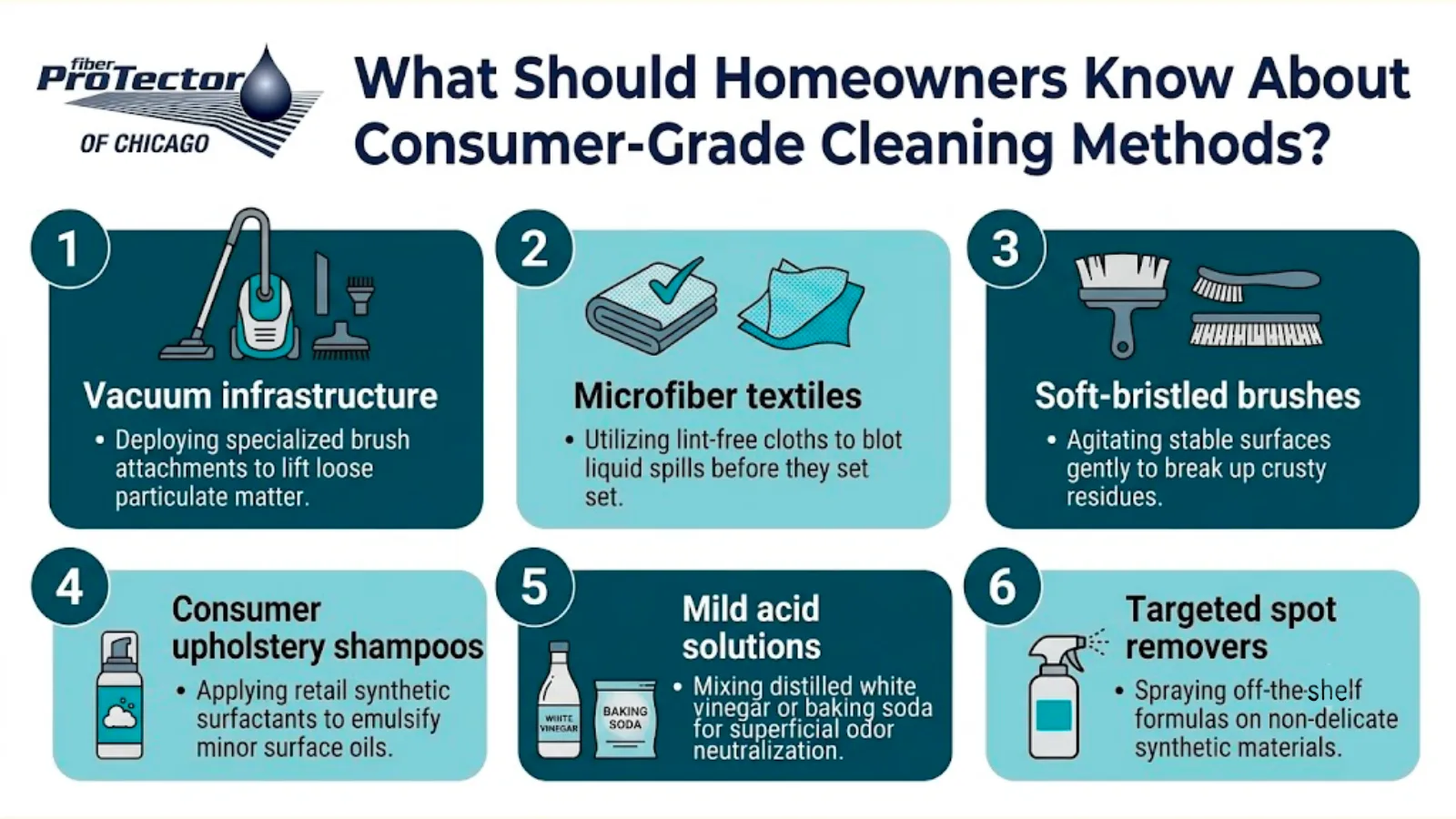
What Should Homeowners Know About Consumer-Grade Cleaning Methods?
Many property owners attempt to address upholstery issues independently using retail rental machinery, commercial spot cleaners, or conventional household formulations. While these instruments offer immediate convenience for light upkeep, they lack the vacuum lift and thermal regulation required to pull contaminants from deep within furniture padding. The reality on the ground is that consumer equipment often leaves fabrics oversaturated, which accelerates fiber degradation and traps dirt beneath the surface layer.
A standard residential maintenance inventory typically involves:
- Vacuum infrastructure: Deploying specialized brush attachments to lift loose particulate matter.
- Microfiber textiles: Utilizing lint-free cloths to blot liquid spills before they set.
- Soft-bristled brushes: Agitating stable surfaces gently to break up crusty residues.
- Consumer upholstery shampoos: Applying retail synthetic surfactants to emulsify minor surface oils.
- Mild acid solutions: Mixing distilled white vinegar or baking soda for superficial odor neutralization.
- Targeted spot removers: Spraying off-the-shelf formulas on non-delicate synthetic materials.
What Are the Real Benefits of Managing Fabric Care Independently?
The primary motivation for selecting a do it yourself upholstery cleaner approach centers on immediate cost containment and schedule flexibility. Homeowners can address unexpected accidents instantly without coordinating technician arrival windows or paying minimum service call fees. For durable synthetic textiles like nylon or polyester, immediate consumer intervention prevents minor liquid spills from curing into permanent stains.
- Lower upfront financial outlays: Eliminate professional labor service fees by utilizing existing household assets or budget-friendly retail products.
- On-demand execution capabilities: Clean accidental spills immediately at 2 a.m. without waiting for an available business appointment.
- Effective surface-level maintenance: Remove superficial dust and loose pet dander regularly to keep active spaces looking presentable.
What Risks Do Homeowners Face When Using Retail Cleaners?
The hidden danger of independent fabric cleaning is the high probability of permanent material damage due to incorrect chemical application or excessive moisture. Unlike standard carpets, fine furniture textiles feature intricate weaves and delicate natural fibers such as silk, wool, linen, and viscose. When exposed to excessive water or high-pH retail alkaline shampoos, these materials frequently experience fiber browning, dye migration, and severe texture distortion.
Here’s the part most companies won’t tell you: consumer machinery lacks sufficient extraction power. This operational deficit introduces severe complications:
- Permanent fabric distortion: Ruin delicate natural fibers through over-saturation, leading to irreversible shrinkage or fiber thinning.
- Chemical residue accumulation: Leave soapy surfactants embedded in the weave, which creates a sticky matrix that attracts dirt faster.
- Subsurface moisture retention: Allow water to pool deep within internal cushions, creating optimal conditions for stale, musty odors.
Why Do Professional Extraction Protocols Yield Superior Results?
Professional upholstery care transcends basic surface cleaning by utilizing advanced thermodynamic extraction, precise chemistry, and certified fabric identification. Certified technicians assess fiber composition, dye stability, and backing materials before selecting a tailored, low-moisture or dry-cleaning methodology. This meticulous approach safely completely separates complex oily binders from individual fibers without risking structural shrinking or color bleeding.
- Deep-tier soil extraction: Extract embedded body oils, atmospheric pollutants, and deeply buried dander using industrial-strength vacuum lift systems.
- Advanced stain molecular breakdown: Dissolve complex protein, synthetic dye, and oil-based spots with specialized, fabric-safe chemical counteragents.
- Accelerated moisture evaporation: Minimize dry times to a matter of hours using professional air-moving infrastructure to block musty odor formation.
- Preservation of luxury textiles: Protect high-value investments by applying specialized, pH-balanced formulas designed for exotic or antique weaves.
How Does Advanced Fabric Treatment Protect Your Investment?
Integrating the specialized Fiber ProTector Treatment establishes an advanced, cross-linking molecular shield around every individual textile fiber. This transparent barrier dramatically increases surface tension, preventing liquid spills, oil-based soils, and dry particulate matter from penetrating the porous fiber core. The fabric retains its original texture, breathability, and visual profile while becoming significantly easier to maintain during routine vacuum cycles.
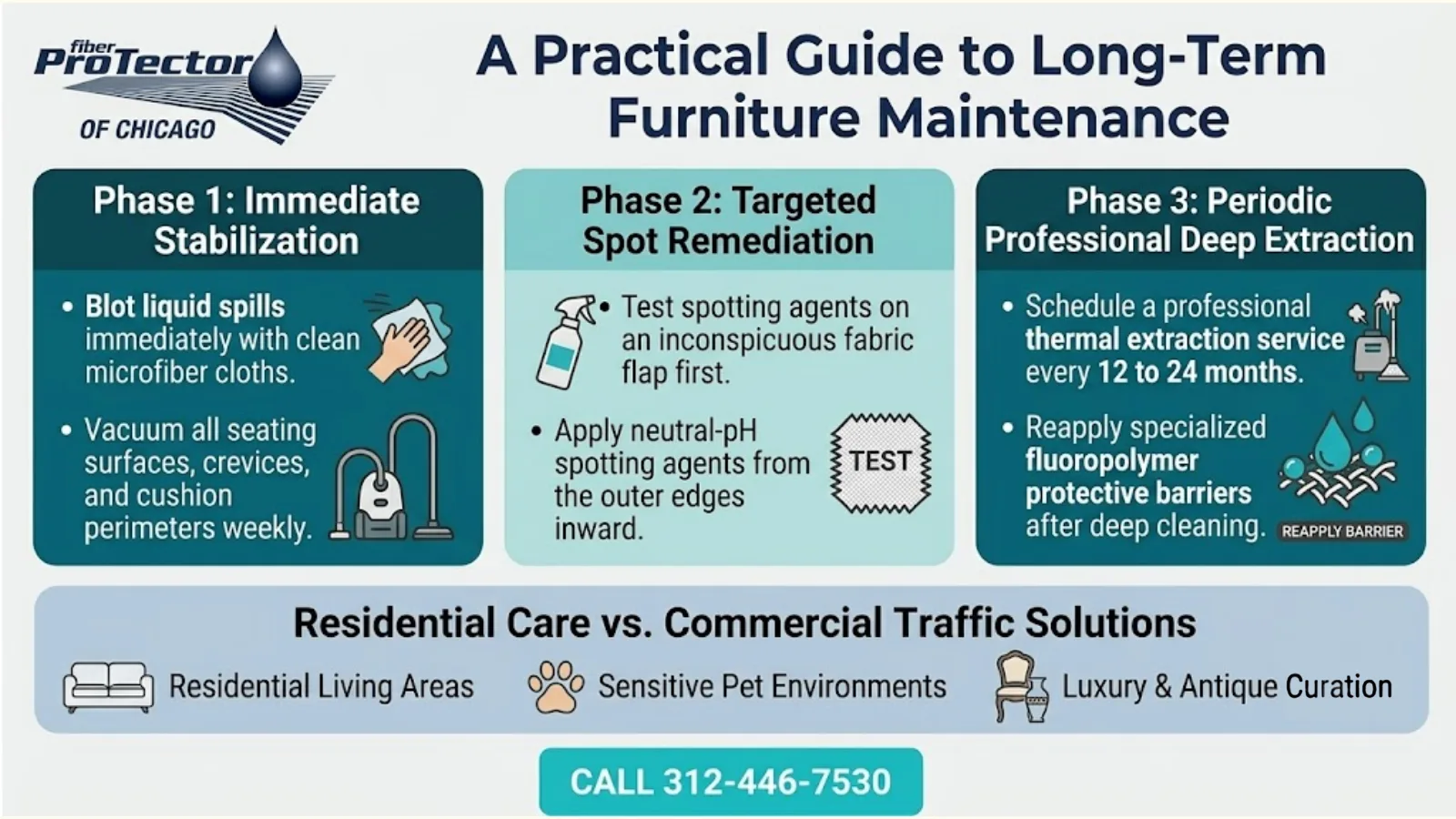
A Practical Guide to Long-Term Furniture Maintenance
Phase 1: Immediate Stabilization
- Blot liquid spills immediately with clean microfiber cloths using zero downward pressure to prevent driving the liquid deeper into the backing material.
- Vacuum all seating surfaces, crevices, and cushion perimeters weekly with an un-agitated upholstery tool to remove sharp dry soils.
Phase 2: Targeted Spot Remediation
- Test any consumer-grade spotting agents on an inconspicuous fabric flap first to verify dye stability and check for ring formation.
- Apply neutral-pH spotting agents working from the outer edges of the stain inward to avoid spreading the blemish footprint.
Phase 3: Periodic Professional Deep Extraction
- Schedule a professional thermal extraction service every 12 to 24 months to flush out deep body oils and microscopic airborne particulates.
- Reapply specialized fluoropolymer protective barriers after every deep cleaning cycle to maintain optimal spill resistance.
Residential Care vs. Commercial Traffic Solutions
- Residential Living Areas: Focuses on removing organic food spills, pet dander, skin oils, and tracking residues from high-use family seating.
- Sensitive Pet Environments: Prioritizes deeper extraction to neutralize specialized protein-based pet odors and embedded hair without irritating sensitive animals.
- Luxury & Antique Curation: Mandates zero-moisture or specialized solvent dry-cleaning protocols to safeguard historical weaves, delicate trimmings, and unstable organic dyes.
Comparative Analysis: Treatment Methodologies
| Operational Metrics | Independent Consumer Cleaning | Fiber ProTector Professional System |
| Primary Extraction Power | Low-vacuum, portable pump motors | Industrial truck-mounted vacuum infrastructure |
| Moisture Regulation | High risk of over-saturation | Calibrated, low-moisture or dry solvent fluid control |
| Chemical Residue Profile | Sticky surfactant film remains behind | Zero sticky residue with complete rinsing agents |
| Deep Stain Eradication | Limited to surface-level aesthetics | Molecular breakdown of set-in oil and protein bonds |
| Fiber Protection Capability | None | Long-lasting hydrophobic and oleophobic barrier |
Essential Textile Terms for Homeowners
Cellulose Browning: A brown discoloration caused when natural fibers like cotton or linen remain damp for extended periods during slow drying cycles.
Surfactant Attractant: Residual soap left behind by weak retail vacuums that acts like a magnet for airborne dust and tracked-in oils.
Viscose Fiber Weakening: The structural collapse of synthetic wood-pulp fibers when exposed to water, causing permanent matting and loss of shimmer.
Dye Migration: The bleeding or transferring of unstable fabric dyes into adjacent lighter sections due to high-pH chemicals or excessive heat.
A Practical Note on Avoiding Common Homeowner Mistakes
When working in the field, we constantly see beautiful couches ruined because a homeowner used a high-alkaline retail spotter on a natural wool or linen blend. This instantly sets the stain or creates permanent fiber browning. Always verify your fabric’s cleaning code—usually found on the law tag as W, S, WS, or X—before applying any moisture. If your piece features custom luxury fabrics, skip the store-bought chemicals entirely to preserve the material’s structural integrity.
Putting Your Fabric Care Strategy into Motion
Preserving the elegance and structural soundness of fine upholstered furniture requires moving beyond superficial surface wiping. While independent maintenance tools are perfectly suited for sudden minor spills, deep-set soil extraction and advanced textile preservation demand specialized commercial engineering. Choosing a professional protocol eliminates the operational risks of fabric shrinking, dye bleeding, and structural water damage.
Ensure your valuable interior investments remain beautifully protected against daily wear by securing a professional maintenance plan tailored specifically to your home’s unique textiles. Learn more about protecting your home’s assets and consult with our specialists by bypassing a risky do it yourself upholstery cleaner alternative. Connect with our dedicated service team and Call (312) 446-7530 today to establish a baseline protection assessment for your fine furnishings.
Frequently Asked Questions
Q: How often should my home’s fine upholstery undergo professional cleaning?
A: Most premium residential upholstery requires comprehensive professional extraction every 12 to 24 months to maintain material integrity. Active households containing young children, multiple pets, or high-traffic entertainment spaces may require specialized maintenance intervals every 6 to 12 months to prevent oils from binding permanently to fibers.
Q: Can specialized professional treatments completely eliminate stubborn pet odors?
A: Yes, specialized commercial extraction effectively neutralizes deeply embedded pet odors by breaking down organic protein bonds trapped within cushion cores. Unlike retail cover-up sprays, professional sub-surface rinsing eliminates the biological source of the odor without leaving behind heavy synthetic fragrances.
Q: Is professional thermal cleaning safe for exotic or highly delicate luxury fabrics?
A: Yes, certified technicians utilize specialized dry-solvent or low-moisture extraction protocols engineered specifically to protect delicate materials like silk, wool, and linen. Every piece undergoes comprehensive dye-stability testing and fiber identification before any structural cleaning process commences.
Q: What are the primary risks associated with independent upholstery cleaning?
A: The most common risks include permanent fiber browning, fabric shrinkage, dye migration, and sub-surface mold development from severe over-wetting. Furthermore, weak retail extraction machinery leaves behind sticky chemical residues that accelerate future soil accumulation.
Q: How does the specialized Fiber ProTector treatment safeguard fine furnishings?
A: The Fiber ProTector treatment applies an advanced, non-toxic molecular shield around individual fibers to repel water and oil-based fluids. This chemical barrier prevents everyday spills from absorbing into the fabric weave, allowing homeowners to easily blot accidents away before a permanent stain can form.