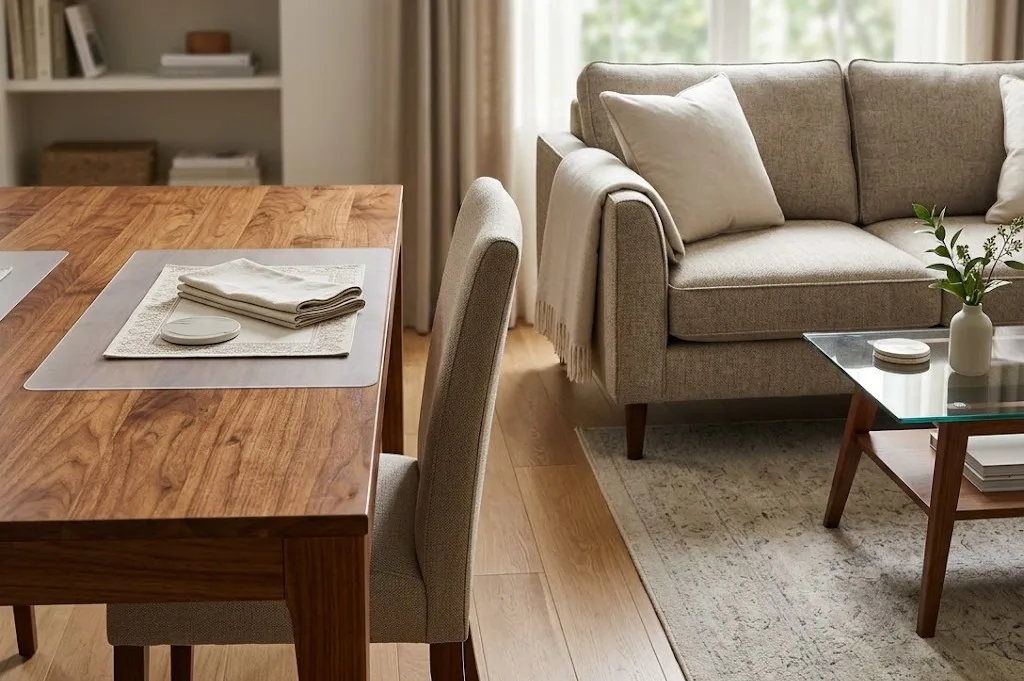
Investing in high-end upholstery, heirloom antiques, or a custom living room layout defines the character of your home. However, daily life can quickly degrade these assets. Understanding the mechanics of protecting furniture from structural and aesthetic decline preserves your capital investment and maintains an immaculate interior.
At Fiber ProTector of Chicago, we provide specialized care for homeowners across the Chicago, Illinois metropolitan area. Our mission is to safeguard your fine textiles, bespoke area rugs, and luxury upholstery from the inevitable accidents of daily residential life.
Key Takeaways
- Prevent Surface Friction: Utilize coasters, felt pads, and placemats to eliminate structural scratches and thermal shock.
- Mitigate Solar Degradation: Position high-value textiles away from direct ultraviolet exposure to prevent fiber rot.
- Implement Neutral Chemistry: Avoid household detergents containing harsh alkalis that strip natural fabric oils.
- Deploy Advanced Barriers: Treat premium fibers with specialized polymer protectants to stop spills from becoming permanent stains.
Why Are Coasters and Placemats Essential for Surface Integrity?
Using dedicated physical barriers like coasters and placemats is the most efficient method for protecting furniture from localized thermal shock and moisture ring formation. When hot or cold vessels sit directly on finished wood or delicate stone, they cause rapid microscopic expansion or condensation absorption.
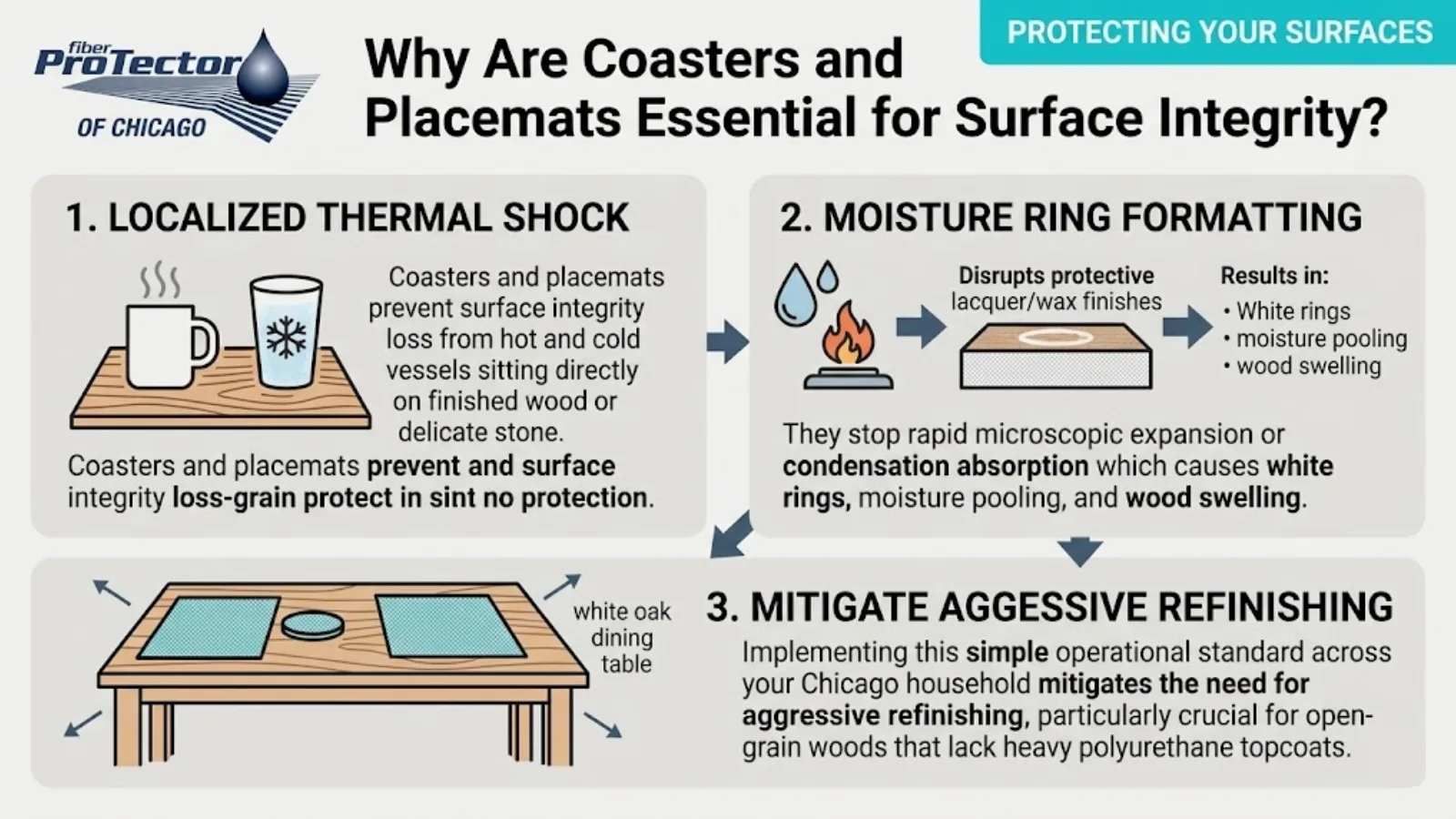
Implementing this simple operational standard across your Chicago household mitigates the need for aggressive refinishing. This is particularly crucial for open-grain woods like white oak or walnut dining tables that lack heavy polyurethane topcoats.
How Does Direct Sunlight Break Down Your Upholstery Fabrics?
Ultraviolet radiation and solar heat generate photo-oxidation, which actively breaks down chemical dyes and weakens natural textile fibers. This structural degradation causes rich fabrics to fade unevenly and accelerates fiber embrittlement, leading to premature tearing under standard weight loads.
The relentless afternoon sun shifting through Chicago bay windows acts as an environmental abrasive. If you leave silk, linen, or fine wool exposed to raw daylight, the damage becomes irreversible within a few seasons.
Sun Damage Prevention Tactics
- Install Low-E Window Films: Apply specialized micro-thin films to glass to filter out up to 99% of destructive UV wavelengths.
- Rotate Layouts Seasonally: Shift the orientation of primary seating pieces twice a year to equalize ambient light exposure.
- Deploy Automated Sheers: Program motorized window treatments to close during peak solar radiation hours between 11 a.m. and 3 p.m.
When Should You Utilize Specialized Protective Covers?
Form-fitting canvas or breathable textile covers offer an impenetrable defense mechanism against seasonal dust accumulation, construction debris, and heavy tracking during large residential gatherings. They isolate the underlying fabric from direct contact with airborne contaminants and physical abrasion.
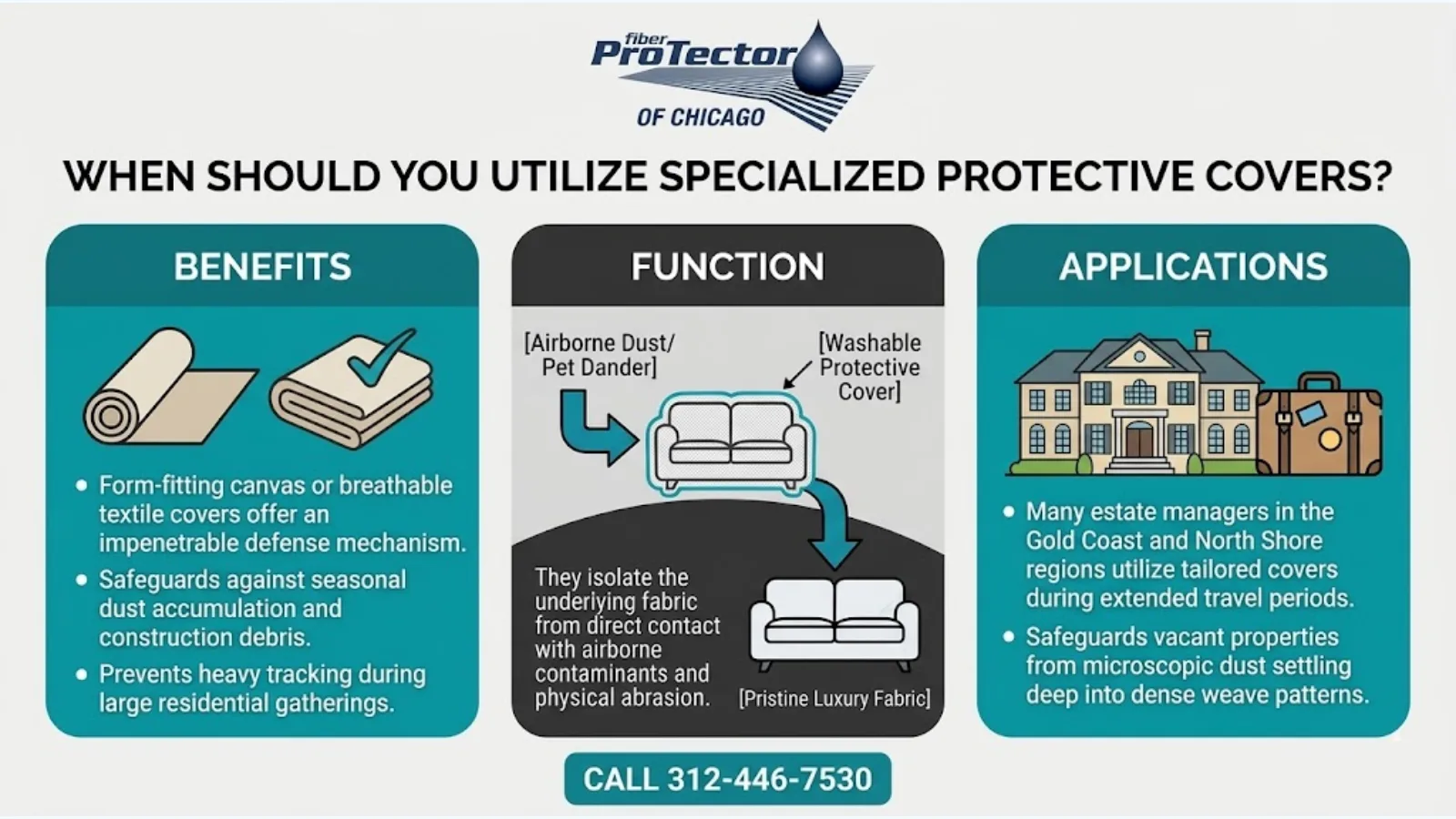
Many estate managers in the Gold Coast and North Shore regions utilize tailored covers during extended travel periods. This safeguards vacant properties from microscopic dust settling deep into dense weave patterns.
How Do Pets Accelerate the Degradation of Fine Fabric?
Domestic pets introduce sharp claws, abrasive dander, body oils, and highly acidic biological fluids that chemically alter and physically tear delicate textile structures. Natural oils from animal fur transfer directly to fibers, creating localized dirt traps that attract ambient grime.
The reality on the ground is that even well-behaved animals cause micro-abrasions with their claws every time they adjust position. Training your pets to use dedicated resting stations or installing dense, tightly woven accent blankets provides a sacrificial barrier that shields your primary upholstery investments.
Why Should You Install Heavy-Duty Felt Pads Under Legs?
Premium felt floor glides distribute heavy structural weight evenly, preventing deep indentation compaction in carpets and eliminating deep gouges on hardwood surfaces. Without these energy-absorbing buffers, moving a couch even a few inches can splinter wood flooring or shear off furniture joints.
| Footing Type | Floor Impact Risk | Longevity Rating | Best Use Case |
| Bare Plastic/Metal Glides | High (Scratches & gouges) | Low (Degrades quickly) | Temporary utility items |
| Standard Adhesive Felt | Low (Safe for hardwoods) | Medium (Glue can slip) | Low-traffic accent chairs |
| Screw-On Heavy-Duty Felt | None (Optimal distribution) | High (Mechanical hold) | Heavy sectionals & dining sets |
What Makes Common Household Cleaners Dangerous for Luxury Fabrics?
Over-the-counter cleaning agents frequently contain high-pH alkalis, ammonia, or optical brighteners that chemically burn natural fibers and strip protective lacquer coatings. These aggressive formulas can permanently set stains rather than lifting them, or create bleached rings that require professional color correction.
Instead of grabbing a generic spray bottle during a crisis, establish a strict protocol using neutral-pH formulas. Here is a baseline inventory checklist for safe spot maintenance:
🧼 Safe Maintenance Inventory Checklist
- Distilled Water: Prevents mineral ring formulation caused by hard Chicago municipal tap water.
- White Cotton Towels: Ensures zero dye transfer from the cleaning cloth into the vulnerable upholstery.
- pH-Neutral Fabric Shampoo: Safely emulsifies surface oils without stripping the inherent lanolin from wool or structural sizing from linens.
How Does Microscopic Dust Act as an Abrasive Material?
Settled ambient dust consists of jagged microscopic minerals and skin cells that act like fine-grit sandpaper when subjected to the friction of normal seating use. Every time someone sits down, these particles are ground deeper into the yarn, cutting individual fibers at a structural level.
🧹 The Dust Mitigation Protocol
- Bi-Weekly Microfiber Wiping: Utilize dry, high-density microfiber cloths to lift particles without introducing moisture.
- Low-Suction Vacuuming: Employ a soft-brush upholstery attachment to extract deeply embedded grit from crevices.
- Cushion Rotation: Flip and rotate loose cushions weekly to prevent localized dust compaction zones.
Why Is Immediate Liquid Extraction Critical to Avoid Staining?
Liquids travel via capillary action through fabric yarns, and allowing them to dry permits the foreign pigment to form a permanent chemical bond with the fiber core. Once a liquid evaporates, it leaves behind concentrated solute lines that are incredibly difficult to extract safely.
Homeowner Insight
Here is a crucial step most homeowners miss during a spill crisis: never scrub the surface. Rubbing forces the liquid deeper into the inner cushion padding, spreading the stain laterally. Always blot firmly from the outside edge of the spill moving inward, using a clean, dry white towel to transfer the liquid straight up out of the weave.
How Do Improper Lifting Techniques Structural Damage Frames?
Dragging heavy furniture applies severe lateral torque to mechanical joints, which loosens dowels, cracks wood frames, and destroys underlying floor materials. Furniture frames are engineered to bear load vertically rather than resisting horizontal sheer forces.
When rearranging a room layout, always employ a minimum of two people to lift the piece entirely clear of the ground. For substantial items like solid mahogany sideboards or heavy sleeper sofas, utilizing professional furniture dollies with non-marking rubber wheels prevents catastrophic structural failure.
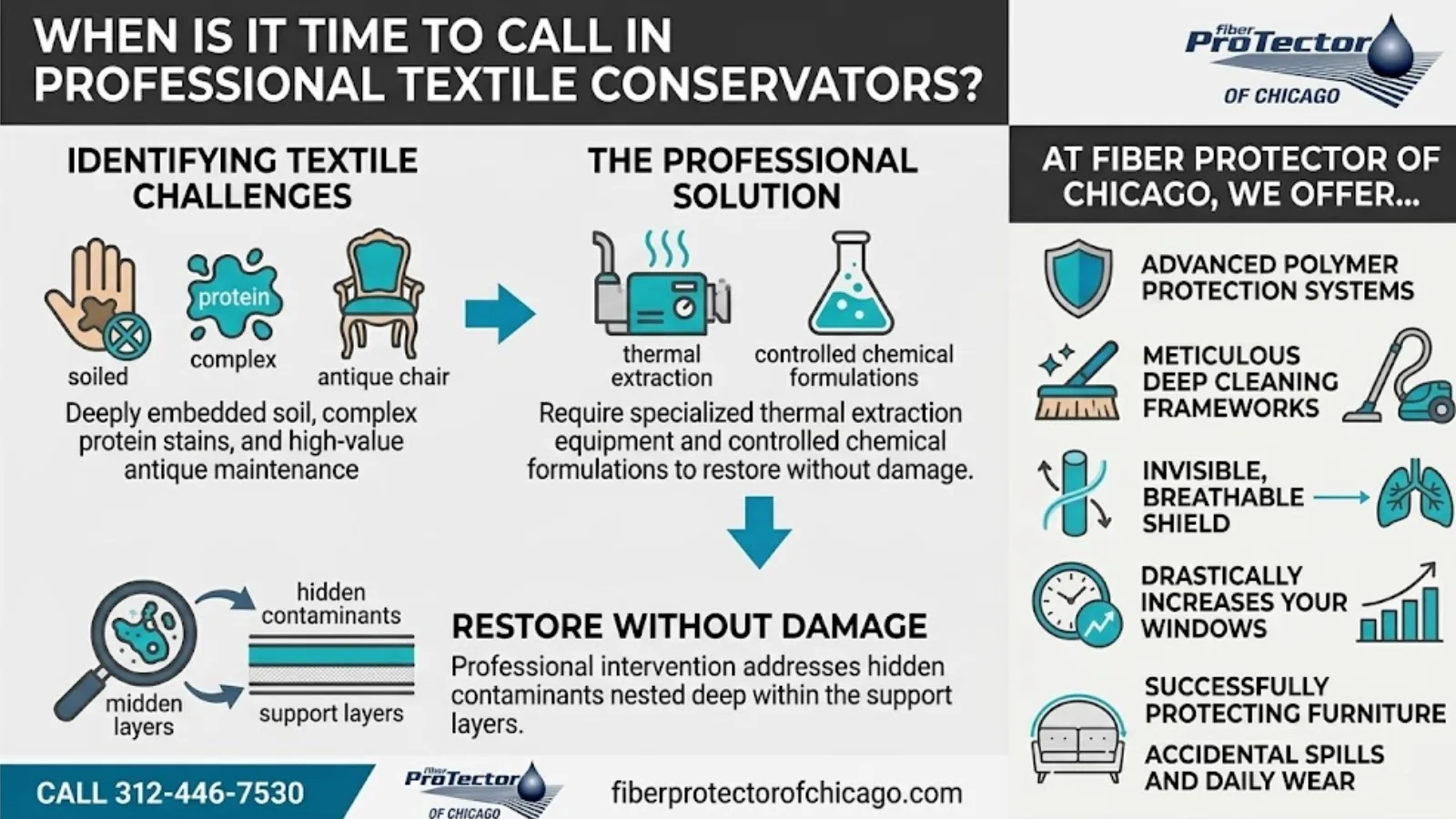
When Is It Time to Call in Professional Textile Conservators?
Deeply embedded soil, complex protein stains, and high-value antique maintenance require specialized thermal extraction equipment and controlled chemical formulations to restore without damage. Professional intervention addresses hidden contaminants nested deep within the support layers.
At Fiber ProTector of Chicago, we offer advanced polymer protection systems alongside meticulous deep cleaning frameworks. Our proprietary treatments surround individual fibers with an invisible, breathable shield that drastically increases your windows for successfully protecting furniture against accidental spills and daily wear.
Putting Your Furniture Preservation Plan into Motion
Maintaining the pristine condition of your home interior requires a balance of daily protective habits and specialized technical treatments. By implementing structured barrier controls and eliminating harsh cleaning variables, you actively prevent the premature structural and aesthetic decline of your assets.
For premium protection that stands up to the demands of busy Chicago households, our team delivers advanced, non-toxic fiber sealing solutions that preserve the factory-fresh feel of your finest textiles.
Protect your home investment by securing an advanced fabric treatment from Fiber ProTector of Chicago today. Call (312) 446-7530 to schedule right now.
Frequently Asked Questions
Q: How frequently should premium home upholstery undergo professional cleaning?
A: High-use residential furniture requires deep extraction services every 12 to 24 months to remove embedded grit. Homes with indoor pets, active children, or heavy entertaining schedules should shorten this window to every 6 to 12 months to prevent permanent fiber matting.
Q: What environmental factor causes the most rapid fading in modern fabrics?
A: Direct solar radiation carrying ultraviolet (UV) and infrared wavelengths causes the fastest color degradation and fiber rot. These invisible rays break down stable molecular dye bonds, resulting in distinct, patchy discoloration across exposed seating surfaces.
Q: Are aftermarket fabric protection treatments safe for delicate luxury textiles?
A: Yes, specialized solvent-based protectants are explicitly engineered to coat delicate fibers without changing the texture, color, or breathability. These treatments create a hydro- and oleophobic barrier that holds spills on the surface for easy cleanup.
Q: What is the safest immediate action to take for an oil-based spill on linen?
A: Blot the excess liquid immediately with a dry white cloth, then apply a small amount of neutral-pH dry solvent cleaner. Avoid applying water or standard dish soap, as this can expand the oil ring and permanently alter the linen’s natural structural tension.
Q: Can high ambient humidity permanently warp solid wood furniture frames?
A: Yes, prolonged exposure to rapid humidity fluctuations causes wood cells to swell and contract, leading to warping and splitting. Maintaining a stable indoor relative humidity between 35% and 45% is vital for safeguarding structural wood joins.