
You effectively apply fabric protection for couch textiles when you remove dirt and spray a professional treatment evenly. Applying premium fabric protection for couch surfaces creates an invisible shield against these unexpected messes.
Your luxury investments stay pristine much longer when Fiber ProTector of Chicago properly safeguards them from unforeseen threats.
Key Takeaways
- Microscopic Shielding: Advanced formulas alter surface tension so liquids pool instead of absorbing into the threads.
- Abrasion Prevention: Repelling dry soil stops sharp dirt particles from severing delicate fibers.
- Financial Leverage: Proactive application extends furniture lifespans, drastically reducing premature replacement costs.
How Is the Protective Barrier Properly Applied to My Furniture?
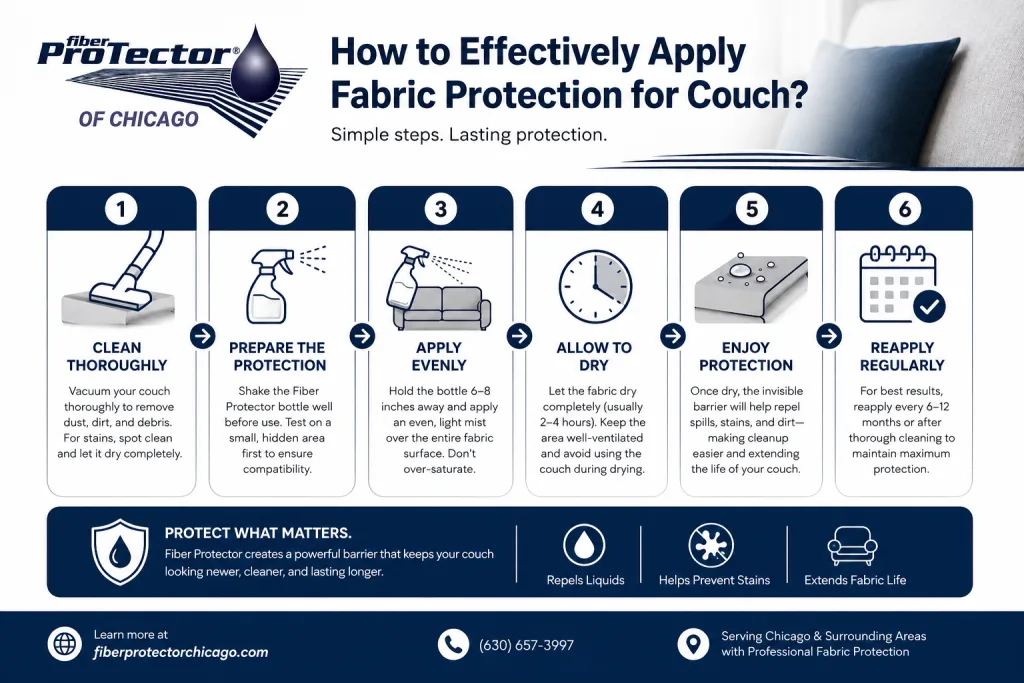
You must follow strict clinical protocols to achieve flawless, edge-to-edge coverage. Thorough preparation prevents future chemical failures completely. Our team utilizes specific, highly calibrated techniques that guarantee total protection against aggressive household stains. Precision dictates the ultimate success of your invisible barrier.
Our Strategic Application
- Phase 1: Deep Debris Extraction
- Technicians remove all loose debris using high-powered, HEPA-filtered vacuum systems.
- Specialized spot removers neutralize any existing blemishes before the new chemical application.
- Phase 2: Climate-Controlled Preparation
- The entire surface area must dry completely to ensure the polymers bond securely.
- Ambient room temperature is monitored closely to optimize the curing environment.
- Phase 3: Precision Polymer Application
- The barrier formulation is sprayed evenly across all textile sections using calibrated pressure.
- Technicians maintain a consistent distance to prevent localized oversaturation and stiffening.
- Phase 4: Curing and Ventilation
- The room is ventilated thoroughly to eliminate temporary chemical fumes rapidly.
- Access to the space is strictly restricted until the treatment cures entirely into the weave.
Why Are Untreated Luxury Fibers So Vulnerable to Permanent Damage?
Natural wool and silk possess tiny, unprotected pores that trap moisture instantly upon contact. Once a dark liquid breaches this natural defense, permanent discoloration sets in rapidly. Your high-end pieces lose their rich color depth. Smart homeowners block this absorption before it starts.
- Ultraviolet Degradation: The sun bleaches expensive dyes and weakens structural integrity over time. Professional treatments reflect these ultraviolet rays to preserve your interior design aesthetic perfectly.
- Moisture Trapping: Untreated threads pull liquid deep into the cushion core. This creates a breeding ground for mold during humid Chicago summers.
- Friction Wear: Unprotected fibers hold onto abrasive dirt. Every time you sit down, you essentially sand natural fibers down to dust.
What Are the Most Common Household Threats to Your Living Room?
Your lounge area faces severe hazards daily from food, pets, and environmental tracking. A reliable shield repels diverse substances before they cause irreversible harm. A swift response neutralizes these threats, but utilizing commercial-grade fabric protection for couch textiles stops the damage entirely.
- Red wine spills: Creates stubborn, oxidative marks on light-colored upholstery.
- Muddy paw prints: Embeds deep, abrasive soil directly into fine threads.
- Coffee drips: Leaves highly acidic remnants that erode delicate organic materials.
- Greasy food drops: Transfers heavy oils straight into the porous weave.
- Ink pen leaks: Discharges highly concentrated dark pigment onto your favorite seat.
- Pet accidents: Produces corrosive, urea-heavy spots that burn through untreated fibers.
How Often Do You Need to Maintain the Protective Layer?
Heavy foot traffic and frequent friction wear away the microscopic barrier gradually over time. You never want to discover a chemical failure after a severe spill occurs. You must renew the application annually to guarantee maximum safety. Remember, consistent evaluations save furniture.
- Polymer Degradation: The natural breakdown of the chemical shield caused by daily household friction and ambient air exposure.
- Surface Tension Testing: A precise evaluation where technicians use a simple water drop test to reveal the exact current condition of your safeguard.
- High-Traffic Zones: Areas requiring more frequent barrier evaluations, especially in residences managing multiple indoor pets.
Is Professional Furniture Defense Actually Worth the Upfront Cost?
Proactive preservation saves you thousands of dollars in premature replacement costs long-term. People often view professional treatments as an unnecessary expense until an accident ruins a designer piece. You eliminate unnecessary stress over minor accidental drops. It is a highly strategic financial decision.
Compare the reality of retail sprays versus an expert fabric protection for couch application.
| Feature | Retail/DIY Sprays | Fiber ProTector of Chicago |
| Chemical Structure | Weak, water-based silicones. | Advanced, deep-penetrating polymers. |
| Texture Impact | Often leaves a stiff, sticky residue. | Maintains exact original softness. |
| Longevity | Fades rapidly within a few short months. | Delivers robust defense for 12+ months. |
| Cost Efficiency | Cheap upfront, highly expensive upon failure. | Higher initial investment, eliminates replacement costs. |
How Should You Care for Your Textiles Between Professional Visits?
Even a robust chemical shield requires proper daily homeowner habits to function perfectly. You must blot fresh spills immediately with a clean, dry cloth. Agitation forces the liquid past the protective barrier. Keep your maintenance routine strictly disciplined.
Vacuum your lounge chairs weekly to extract abrasive dry soil. Address organic spots rapidly before their acidic components break down the repellent layer. Keep direct sunlight away from your most vulnerable luxury pieces whenever possible.
Inside Advice from Our Chicago Upholstery Experts
“Never rub a spill. Rubbing generates heat and friction, which chemically alters the stain and forces it straight through the polymer barrier into the raw silk or wool beneath. Always press straight down with heavy white cotton to absorb the moisture vertically.”
Ready to Bulletproof Your Luxury Furniture?
You deserve absolute peace of mind inside your own immaculate residence. Fiber ProTector of Chicago utilizes advanced polymer formulas to secure your expensive assets, ensuring your beautiful wool and silk pieces survive the chaos of daily life. Stop worrying about accidental spills and lock in your fabric protection for couch today. Call 312-446-7530 to schedule your comprehensive interior evaluation right now.

Frequently Asked Questions
Q: Does the chemical barrier alter the texture of my furniture?
A: Advanced formulas never change the soft feel of your luxurious materials. You retain the exact original texture and absolute comfort of your expensive wool pieces. There is zero stiff residue left behind.
Q: How long does the professional repellent layer last?
A: A premium shield typically lasts twelve months under normal household conditions. You must schedule annual professional evaluations to maintain the highest level of spill defense. High-traffic homes may require faster renewal timelines.
Q: Can I apply a protective upholstery spray myself?
A: Store-bought products completely lack the powerful polymers found in expert treatments. You risk severe surface saturation and permanent chemical damage when you attempt amateur application methods. It is never worth the financial risk.
Q: Does the formula emit harsh toxic odors in the house?
A: Professionals utilize highly refined solutions that produce minimal odor during the application. The subtle scent dissipates completely within a few short hours after the liquid cures. Your indoor air quality remains heavily protected.
Q: Will this treatment block strong pet urine odors?
A: The microscopic shield repels acidic liquids perfectly upon initial contact. Prompt blot removal stops the corrosive urine before it penetrates the threads to produce odors. You must address the spill before it dries.